Lets talk Formulations!
Not sure which formulation base is right for you?
Explore our guide to discover a personalised treatment approach designed around your hair goals, lifestyle, and investment level.
Foam
Foam formulations typically do not have propylene glycol. Some people also find foams are easier to apply because they don't drip as much as liquid/solution.
Takeaway: Go foam if you want PG-Free and less drip.

Gel
Gel formulations are a new option to consider. They are great for balding areas or areas that have very little hair. Gels can be massaged into the scalp without the product dripping everywhere. For Finasteride only gel, it is possible to formulate using an alcohol-free base. For Finasteride and Minoxidil gel, some alcohol is needed to dissolve minoxidil. This is important for minoxidil absorption and to create a smooth, elegant texture that doesn't feel grainy.
Takeaway: If you want low alcohol and have a balding scalp, go with gel.
Lotion
Lotions are sometimes mistaken for solutions or liquids. However, if we think of a traditional lotion, it has a thin, creamy texture that absorbs quickly. This is how our topical lotions are made to perform. Lotions can be used in place of a Gel and have a slightly longer shelf life, making them more economical.
Takeaway: If you want low alcohol and have a balding scalp, go for lotion.
Classic Alcohol
Classic alcohol base contain both propylene glycol and alcohol as its main carrier to help deposit drugs into the skin. This base is well tolerated by most individuals. However, individuals with allergies or sensitive skin may not tolerate the classic alcohol/propylene base.
Takeaway: Widely used and popular. Has a longer shelf life compared to hydro-alcoholic, making it the most economical for everyone.
Hydro-alcoholic
Hydro-alcoholic formulations contain water as well as alcohol (they are not alcohol-free). Hydro-alcoholic formulations are perfect for someone who wants the benefit of a fast drying formula but with less alcohol. The disadvantage with traditional hydro-alcoholic formulations is that they have a shelf life of 30 days compared to the classic alcohol base.
Takeaway: If you have sensitive skin or want fast dry.
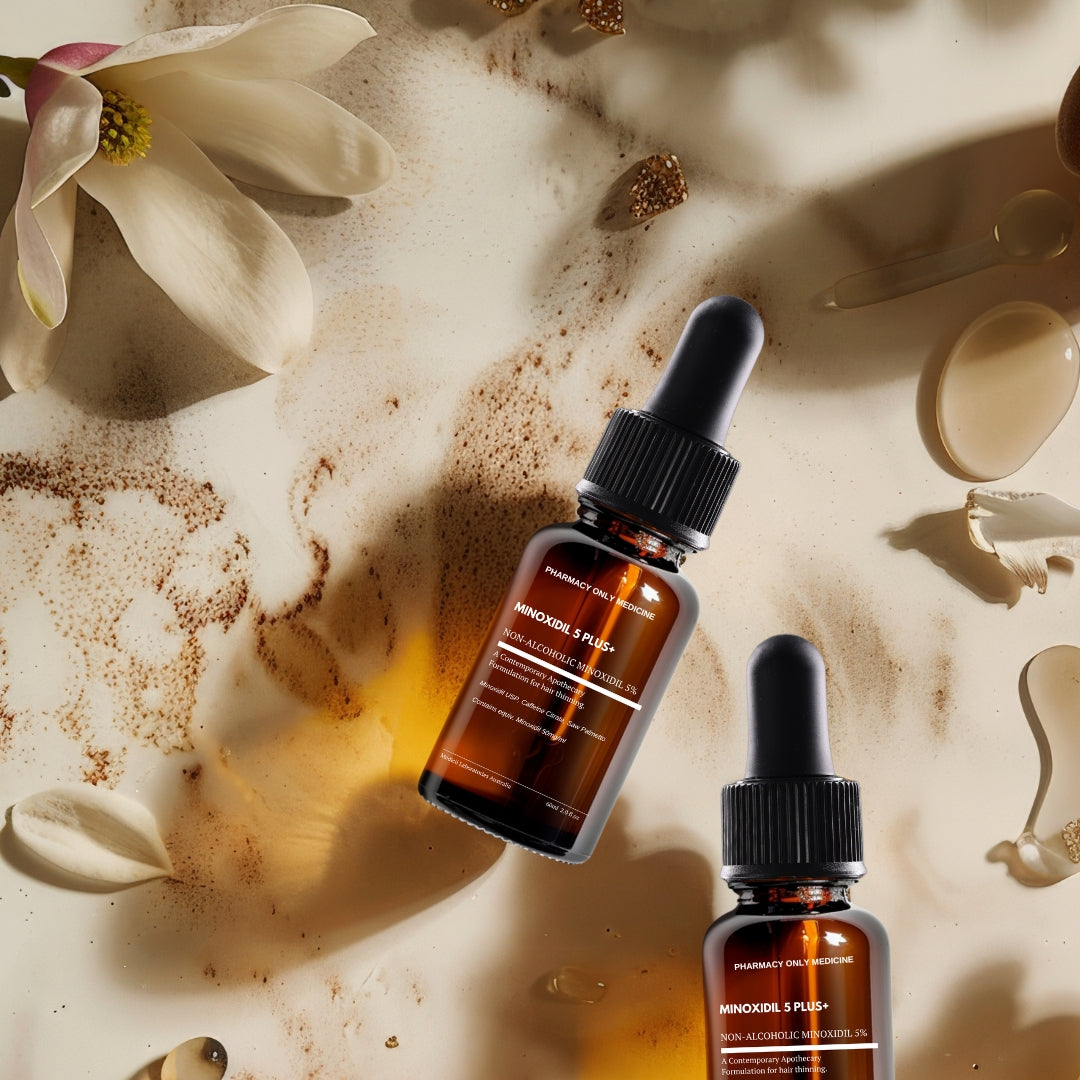
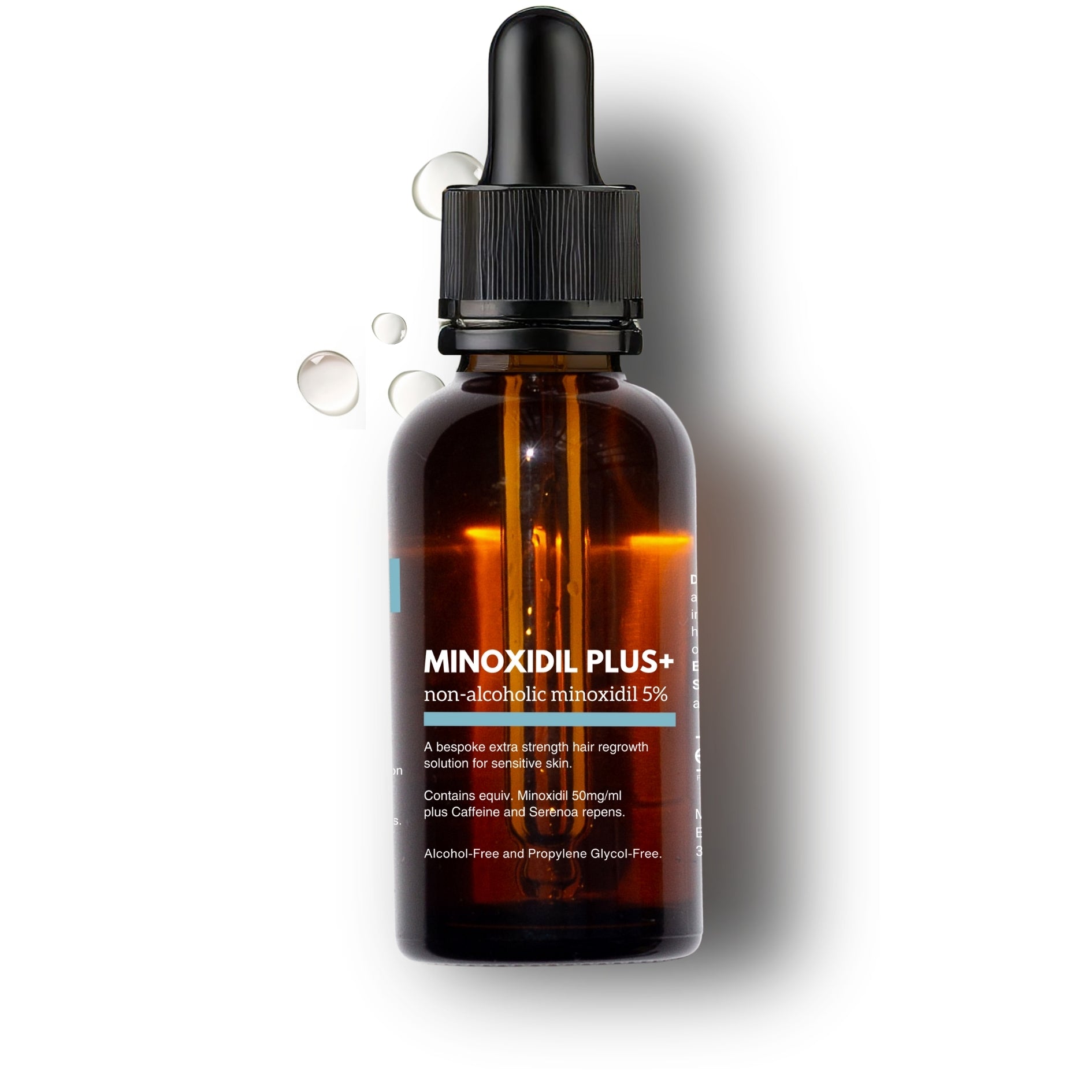
Alcohol-Free and PG-Free
Alcohol-free and Propylene Glycol-free solution is the most recent novel innovation using our Olevit™ base. The absence of alcohol has sparked concerns that Minoxidil cannot be absorbed. If this theory holds true, all pharmaceutical creams and gels would also contain alcohol, but they do not.
A 2023 clinical study by Udare showed that alcohol-free formulations proved to be just as effective as alcoholic minoxidil formulations, with significantly fewer side effects and are better tolerated. The study followed its patients for 12 months.
Takeaway: If you have sensitive skin, skin allergies, or want to take better care of your skin barrier in the long term, choose this option.
Propylene-Glycol Free
Propylene Glycol-Free formulations generally contain more alcohol to help dissolve Minoxidil completely into solution.
Takeaway: This option is good for PG-sensitivity.
How do I know which formulation base is right for me?
Several factors must be considered when deciding which formulation base is right for you. These include ease of use, cost, travel, and storage.
These options can be discussed with your doctor or pharmacist if you have unique requirements.
Topical solutions are the most popular because they are cost effective, easy to travel with and easy to use.
Author: Helen Huynh (B. Pharm) MPS
References:
- Udare, S et al (2023). "Low-Alcohol or Alcohol-Free Minoxidil Formulation for the Management of Androgenic Alopecia: an Indian Perspective." International Journal of Trichology. 15(1): p13-17, Jan-Feb 2023.
- Olsen, E et al. (2002). "A randomized clinical trial of 5% topical minoxidil versus 2% topical minoxidil and placebo in the treatment of androgenetic alopecia in men." Journal of the American Academy of Dermatology, 47(3), 377 385.
- Roberts, J et al (2014). "Response to Topical Minoxidil in Female Androgenic Alopecia." Journal of Dermatologic Therapy. Jul-Aug;27(4):252-4