

Does aminexil regrow hair?
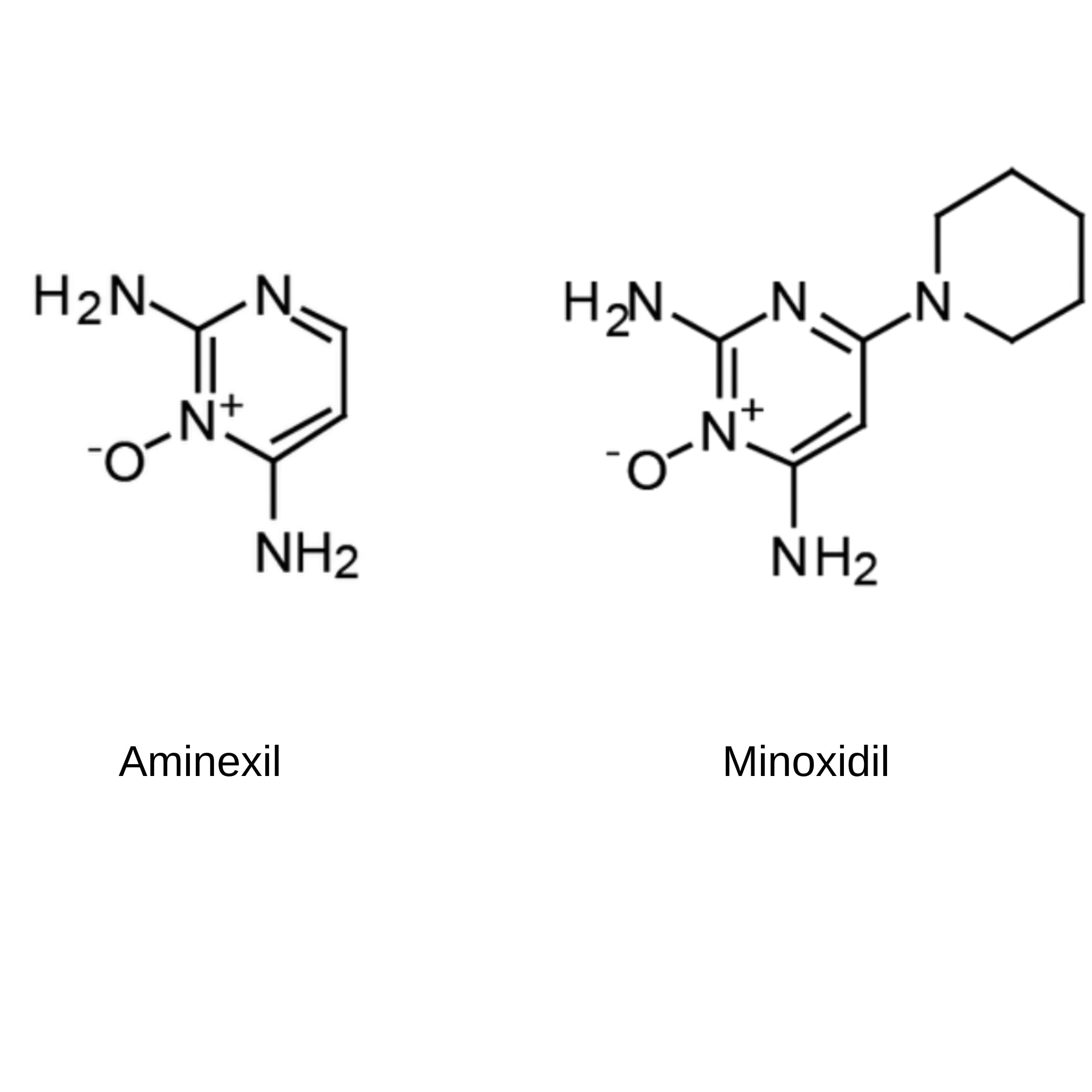
Aminexil, also known as Kopexil (INCI name 2,4 Diamino-pyrimidine-3-oxide) is a chemical compound similar to minoxidil. Our first encounter with aminexil was in 2024 when a distributor approached us to use aminexil in our hair loss solution.
In this article, we will take a look at:
- What is aminexil?
- How does aminexil work?
- Does aminexil regrow hair?
- Does aminexil inhibit DHT and
- Aminexil vs Minoxidil
What is aminexil?
Aminexil (2, 4 Diamino-pyrimidine-3-oxide) is a patented chemical molecule developed by L’Oreal and is claimed by L’Oreal to help prevent prefollicular fibrosis (scarring of the hair follicles). Too much collagen production around the hair follicles or scarring of the follicles causes fibrosis (hardening of skin tissue). When skin around the hair follicles harden, this causes a loss of blood flow to the follicles. As a result, the follicles are starved of nutrients and fall out prematurely. This is why scalp massages are invented - to improve blood flow and blood circulation.

How does aminexil work?
The chemical structure of aminexil is very similar to minoxidil, and some products claim to use minoxidil when, in fact, they use aminexil. To be clear, we are not implying that L'Oreal is making these claims, because we know for a fact that the claims are not in their product information.
Just because the chemical compound has a similar structure to minoxidil, this does not mean it works the same way.
Think of a chemical compound as a key. Now picture aminexil and minoxidil as two similar keys given to you to open the same lock. When a key is slightly out of shape or has a groove that differs from the lock's, it is said to be out of alignment and will not work. Do you see the difference?
According to L'Oreal, "KOPEXIL increases the volume of hair in the growth stage by working on the deep structure of the roots. It rejuvenates the hair roots so that healthy hair growth can persist. The perifollicular fibrosis is a condition in which collagen around the roots becomes rigid, tightens, and pushes the hair out; KOPEXIL helps in softening of the collagen. KOPEXIL is used in hair cosmetics to combat hair loss due to premature exhaustion of the hair root."
Does aminexil inhibit DHT?
According to its technical data sheet, aminexil does not work by inhibiting DHT, nor does it prevent the hair follicles from shrinking. Aminexil helps to soften collagen around the hair follicles to improve blood flow and anchoring of the hair to the scalp. It also states,
"Aminexil is not a drug. Aminexil is a cosmetic product. This product and its statements have not been evaluated by the FDA."
Does aminexil regrow hair?
Given the information provided in its technical data sheet (see Figure 2), there is some evidence that aminexil may help to regrow hair by softening the collagen around the hair follicles to improve blood flow. The study is small, and for this reason, we firmly believe aminexil may be used as a supporting ingredient alongside caffeine, rosemary, and even melatonin, but it is not in a position to replace minoxidil.
Furthermore, aminexil's lower stability compared to minoxidil suggests it breaks down faster (Figure 1).

Aminexil vs Minoxidil
According to its technical data sheet, aminexil was studied in 35 volunteers and for this reason, we believe the sample size is too small. In contrast, minoxidil has been approved by the TGA and FDA for the management of androgenic alopecia for more than thirty-eight years.
| Aminexil | Minoxidil | |
|
Mechanism of action |
|
|
| Approved indication | cosmetic | FDA and TGA approved for androgenic alopecia |
| Usage | 0.1% - 10% |
2% and 5% without a prescription in Australia |
| Route of administration | topical | topical and oral |
| Reported side effects and precautions |
|
|

%20is%20a%20chemical%20compound%20similar%20to%20minoxidil.%20Our%20first%20encounter%20with%20aminexil%20was%20in%202024%20when%20a%20distributor%20approached%20u...)